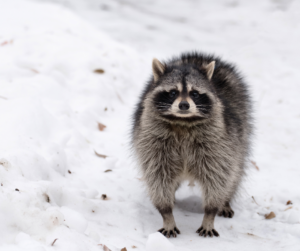
 Raccoons are extremely adaptable wildlife that are built for surviving the winter, with their thick coats of fur. Raccoons will scavenge for food throughout the entire winter, digging through trash cans and raiding left out bowls of pet food. Raccoons will eat anything, including garbage, insects, fruits, vegetables, pet food, eggs, fish, and even small rodents, and if any of these things are present on your property, it could potentially attract a raccoon. Raccoons do not hibernate, but they can enter a state of semi-hibernation called torpor. Torpor is when the raccoons sleep and lower their body temperature and metabolic rate, which allows them to survive without food during the parts of winter when food is scarce. Torpor is more temporary than hibernation and appears to be involuntary. Raccoons will need a safe, warm den to nest in, and your attic is the perfect spot for them. Raccoons are adept climbers who will have no problem getting inside your attic. Raccoons will break their way into your home, ripping up your insulation and soiling it with urine and feces, requiring insulation removal, replacement and sanitization of the affected area. Raccoons will stop at nothing to get inside your home, and they are known to tear through roof shingles, soffits, gutters and flashing in order to gain entry to your attic. Raccoons are also known to nest together to conserve body heat, so you might have more than one raccoon making their home inside your attic this winter.
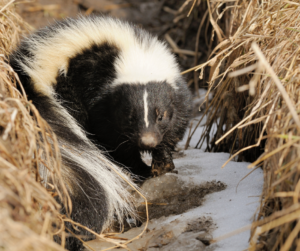 While skunks do not hibernate, they are still not as active during the winter as other nuisance wildlife like squirrels or raccoons. Skunks will grow a second, larger coat of fur over their normal coat to keep them insulated against the winter temperatures, and like squirrels and raccoons, they will often nest in groups in order to share body heat. Skunks will nest in areas that are warm and protected, and preferably close to a food source. This will oftentimes lead them to nest underneath porches and decks, as well as inside sheds, garages and even basements. When food becomes scarce during the winter, skunks will use their powerful paws to dig for grubs to eat, tearing up your yard in the process. Skunks will also take left out pet food off of your porch. Besides their tendency to dig burrows and rip up lawns for grubs, the biggest nuisance that skunks pose is the foul scent they will spray whenever they feel threatened. Skunk spray is a major irritant to the eyes, and the smell can be unbearable. Skunks might spray you or your curious dog, and they are also known to spray around yards to mark their scent.